
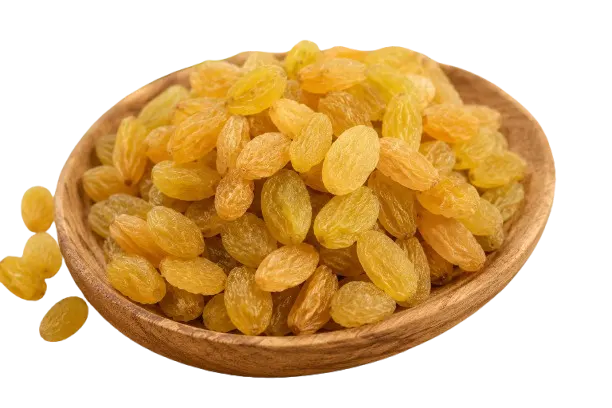
The Light Golden Raisins Exporters serve as the essential foundation for the global dried fruit industry because they provide top-quality products that are processed at vineyards and shipped to international distribution centers. The exporters establish crucial functions that enable the supply chain to maintain product quality while delivering safe and fresh items to customers. Every step of the process, from grape selection at farms to processing and packaging to logistics operations, receives complete attention from the team. Their expertise enables them to connect growers with international customers while maintaining high-quality requirements and compliance with all necessary regulations. The process of light golden raisins reaching worldwide ports for distribution to food manufacturers, retailers, and consumers in different markets helps people understand their journey.
What Makes Light Golden Raisins Unique in the Global Market
Light Golden Raisins Exporters supply a premium dried fruit that stands apart due to its appearance, taste, and processing quality. International food markets consider these products to be their most desirable option because of their distinctive characteristics.
- The product features a natural, bright golden color, which improves its visual attractiveness.
- The product has a soft and tender texture, which people can use for both direct eating and baking purposes.
- The product contains a mildly sweet flavor, which customers can use to create multiple different dishes from various cuisines.
- The organization uses a drying method that they monitor closely to achieve consistent drying results.
- The product delivers high nutritional content,t which includes essential minerals and antioxidants.
- The bakery, confectionery, and cereal industries show high market demand for the product.
- The product provides an extended shelf life when you compare it to raisins that undergo standard drying methods.
Grape Selection at the Vineyard Level
Exporters of Light Golden Raisins start their quality control process at the vineyards by selecting grapes that fulfill export-grade requirements. The selection process influences the taste, color, and shelf life of the product.
- Growers prefer to use seedless grape varieties. Leading hybrid seeds company in India are continuously developing high-yield and disease-resistant seed varieties to meet the evolving needs of modern agriculture.
- Farmers need to grow their crops under ideal weather conditions.
- The process requires complete supervision for all stages of determining fruit maturity.
Harvesting Practices for Premium Quality Output
The exporters of Light Golden Raisins use their specific harvesting methods to achieve uniform product quality and maximum taste results. The time of harvest determines the development of three key attributes, which are textured sweetness, and shelf life.
- Grapes are harvested at their optimum ripeness to achieve an ideal sugar content balance.
- Farm workers choose to harvest manually as this is less likely to cause fruit injuries.
- Farmers have to initiate the harvest early in the morning since the freshness of grapes is better maintained with the help of time.
- Those who deal with grape handling are required to work gently since this activity is beneficial for the skin to stay intact, and thus prevents the entry of harmful substances.
- If grapes are promptly processed after being harvested, they will stay in the same condition as when they were taken from the vine.
Drying Techniques Used by Light Golden Raisins Exporters
The process of controlled drying achieves uniform color and moisture content, which acts as a trademark for light golden raisins exporters in their international business operations. Advanced techniques help preserve nutrients.
- The purpose of sulphur treatment is to maintain color.
- Controlled dehydration environments
- The drying process requires complete moisture removal for effective food preservation.
Sorting and Grading Standards in Export Supply Chains
Light golden raisins exporters apply strict sorting and grading to meet international buyer expectations and regulatory norms.
- The grading process uses size and color to determine the value of items.
- The process requires the elimination of all foreign materials from the area.
- The process requires the company to maintain identical quality standards throughout all its exported products.
Quality Control and Food Safety Compliance
The light golden raisins exporters achieve worldwide trust through their strict implementation of quality control procedures and safety measures throughout their entire processing operation.
- The organization follows all international food safety requirements.
- The organization conducts laboratory tests on a scheduled basis.
- The organization maintains complete supply chain visibility through its traceability system.
Packaging Methods to Preserve Freshness
- Light Golden Raisins Exporters use effective packaging methods to keep their products fresh throughout extended-distance shipping.
- The packaging system uses materials that prevent moisture from entering the packaged products.
- The system provides two packaging options, which include bulk packaging and retail-ready packaging.
- The system uses sealing methods that protect packages from unauthorized access.
Storage and Supply Chain Management
Light Golden Raisins Exporters use their storage and supply chains to preserve product quality through all stages of processing until they ship their final products. The process requires proper handling because it protects three critical elements of the product, which include its freshness, safety, and consistent quality.
- The facility uses temperature-controlled warehouses to prevent all moisture loss and any potential product spoilage.
- The system controls humidity levels to keep the required texture and color of the product.
- The storage area maintains sanitary conditions that protect against any potential contamination.
- The system uses the FIFO (First-In, First-Out) inventory management method to maintain product freshness.
- The system uses supply chain tracking methods, which enable dispatch operations to occur at scheduled times.
Logistics and Transportation from Origin to Port
The exporters of Light Golden Raisins manage their logistics operations with precise execution to secure safe and timely transportation of goods from their production facilities to their export terminals. The process of transporting goods efficiently through all stages of delivery eliminates any risks related to product quality while achieving on-time delivery.
- Inland transportation requires secure food-grade containers for safe transport.
- The system protects against both heat and moisture during the transportation process.
- The system establishes routes that decrease both handling time and transit time.
- The system needs to work with its logistics partners to ensure efficient cargo operation.
- The system needs to track shipments continuously to maintain their integrity throughout the process.
Export Documentation and Regulatory Clearances
The export process for Light Golden Raisins relies on the exporter's ability to manage compliance requirements and documentation work.
- The process involves two main elements.
- Customs and export certifications
- The system needs to provide all required documents for shipment tracking.
Role of Light Golden Raisins Exporters in Global Trade
Light Golden Raisins Exporters help agricultural economies by connecting farmers to international markets, which supports global food supply chains.
- The farmers require access to international markets.
- The company ensures its customers receive products through worldwide distribution channels.
- The process of establishing international trade connections through international business activities.
Future Trends in the Light Golden Raisins Export Industry
The Light Golden Raisins Export industry faces challenges because innovation and sustainability define the new market requirements, which create higher customer expectations.
- The market shows an increasing need for products that display their ingredients without any hidden components.
- The industry is moving toward using sustainable business methods as its standard practice.
- The company is expanding its business operations to new international markets that are currently developing.
Conclusion
The global dried fruit trade achieves its success because Light Golden Raisins Exporters maintain product quality and safety standards throughout their entire distribution process. Their experts enable international supply chains to function properly by managing all aspects of vineyard selection and storage operations and logistics activities until delivery at ports. Light Golden Raisins Exporters build international confidence through their stringent operational standards while adapting to market change,s which leads to sustainable growth in their export business.
FAQs
What industries commonly source products from Light Golden Raisins Exporters?
The bakery and confectionery, cereal, snack, dairy, and food processing industries use Light Golden Raisins Exporters as their suppliers.
How do exporters ensure the consistent color of light golden raisins?
The company uses controlled drying and sulphur treatment together with a quality monitoring system to produce its Light Golden Raisins.
What quality certifications are important in the raisins export market?
The main certifications needed to export raisins include FSSAI certification, together with ISO certification,d HACCP certification, BRC certification, nd international food safety compliance standards.
Do you know how long it will take for the vineyard-to-port export procedure?
The normal period to ship from the vineyard to port is estimated to be between two and four weeks.
What are the factors, includingthe global price of light sultana raisins?
Pricing depends on crop quality and demand, production costs, certifications, logistics, and international market trends.
